
Yes, Southwest Florida is a good place to live for people who want warm winters, Gulf beaches, no state income tax and an outdoor lifestyle, and who can budget for high insurance costs, hurricane risk and long, humid summers. The region rewards buyers who plan carefully and punishes those who buy on a February vacation high.
We help families, retirees and remote workers relocate to Naples, Fort Myers, Bonita Springs, Estero and Marco Island every year. This guide covers what living in Southwest Florida is really like, the trade-offs most relocation articles skip, and the checks we run before any client signs a contract. Florida Listing Experts LLC wrote this guide so you can weigh both sides before you commit.
Key Takeaways
- Florida has no personal state income tax, and homesteaded owners get up to a $50,000 exemption plus the Save Our Homes cap.
- Insurance and flood risk are the biggest costs to budget for. Always get a real quote on the exact address.
- Elevation and construction year matter far more than distance from the beach.
- Lee County listing prices run well below Collier County’s, based on Realtor.com data via FRED.
Who Southwest Florida Suits (and Who Should Think Twice)
Southwest Florida suits buyers whose lifestyle centers on the outdoors, the water and a lower tax bill. It is a harder fit for people who need a big-city job market or who cannot absorb a volatile insurance bill.
| Southwest Florida is a strong fit if you… | Think twice if you… |
| Want golf, boating, fishing and beach time year-round | Need a large corporate job market on site |
| Are retiring or working remotely | Have a tight monthly budget with no room for insurance swings |
| Earn income that a high-tax state would tax heavily | Struggle with heat and humidity |
| Like a community-driven lifestyle (clubs, HOAs, 55+ options) | Want a dense, walkable big-city feel |
| Plan to stay 5+ years and can ride out market cycles | Plan to flip a home within 1 to 2 years |
What Are the Pros of Living in Southwest Florida?
The biggest advantages of living in Southwest Florida are the climate, the tax picture and access to the Gulf of Mexico. Here is how each plays out in daily life.
Winters You Actually Live In
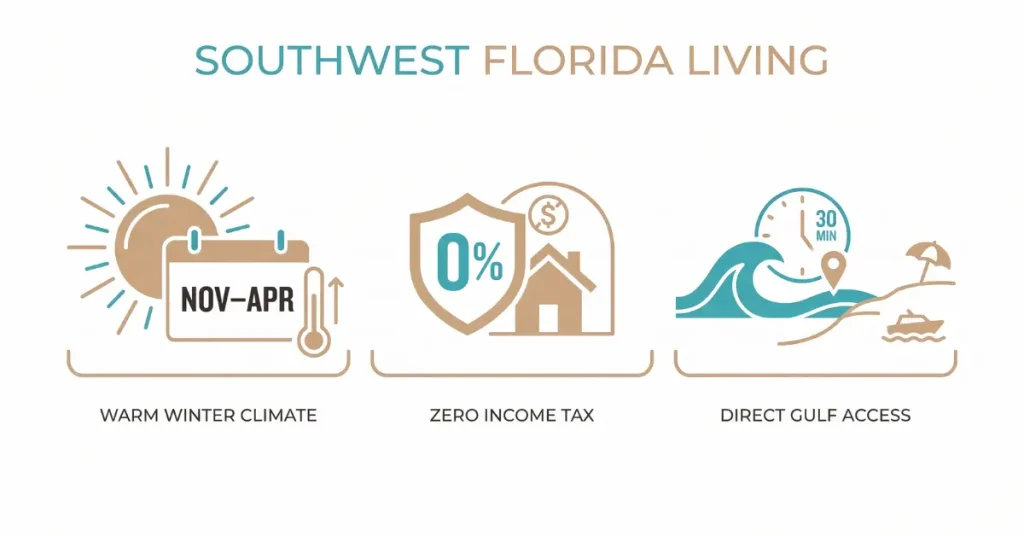
From November through April, Southwest Florida offers dry, sunny days that most of the country only gets for a few weeks a year. That is when golf leagues fill up, farmers markets open and Fifth Avenue South in Naples and the River District in Fort Myers come alive. Residents use this season the way northerners use summer.
No State Income Tax and Homestead Protection
Florida has no personal state income tax, which is a real raise for anyone moving from New York, New Jersey, Illinois or California. Full-time residents can also claim a homestead exemption that cuts up to $50,000 from their home’s taxable value. The Save Our Homes cap limits annual assessed value increases on a homestead property to 3% or the change in the Consumer Price Index (CPI), whichever is lower. Over 10 years, that cap often saves more than the exemption itself.
The Gulf, the Islands and the Everglades
Few regions put this much nature within a 30-minute drive. You get Gulf beaches from Fort Myers Beach to Marco Island, shelling on Sanibel and Captiva, inland lakes, mangrove kayak trails and the western edge of the Everglades. Boaters get direct Gulf access through the Caloosahatchee River, Estero Bay and the Naples canal system.
National Recognition for Naples
Naples took the No. 1 spot in U.S. News & World Report’s 2025-2026 Best Places to Live rankings, which weigh factors like affordability, happiness and the job market. Rankings do not pay your mortgage, but they do reflect real quality-of-life strengths.
What Are the Cons of Living in Southwest Florida?
The main drawbacks of living in Southwest Florida are hurricane and flood risk, insurance costs, summer heat, seasonal traffic and a narrower job market. None of these is a dealbreaker on its own, but buyers who ignore them get burned.
Hurricanes and Storm Surge Are Real
Hurricane Ian made landfall near Cayo Costa as a Category 4 storm in September 2022 and pushed a destructive storm surge into Fort Myers Beach, Sanibel and the low-lying parts of Fort Myers and Naples. Hurricane Milton followed in October 2024. The lesson from both storms was clear: elevation and construction year matter far more than distance from the beach. Homes built to post-2002 Florida Building Code standards on higher ground generally fared far better than older, low-lying homes.
Insurance Costs Can Rival Your Mortgage Payment
Florida homeowners pay an average of $8,292 a year for home insurance, about 181% above the national average, according to Insurify data reported by Insurance Business in April 2026. Flood insurance is a separate policy and is required by most lenders in high-risk flood zones. Always get a real quote on the specific address before you make an offer.
Summers Are Long, Hot and Wet
From June through September, expect daily highs around 90°F, high humidity and afternoon thunderstorms. The Atlantic hurricane season runs from June 1 to November 30. Many longtime residents travel in August or simply shift outdoor time to early mornings.
Red Tide Can Disrupt Beach Days
Gulf beaches in Southwest Florida can be affected by red tide, a harmful algal bloom that in Florida is caused mostly by Karenia brevis. Before planning a beach day, check current conditions with the Florida Fish and Wildlife Conservation Commission.
Growth Brings Traffic
Lee County’s population grew from about 791,000 in 2021 to roughly 876,000 in 2025, according to U.S. Census Bureau estimates. Add seasonal residents from January through April, and I-75, US-41 and the bridges to the islands get congested. Living close to where you shop, work and play makes a bigger difference here than in most places.
A Narrower Job Market
The local economy leans on healthcare, construction, real estate, tourism and hospitality. Remote workers and retirees thrive here. Professionals who need a large corporate employer base often find fewer options than in Tampa or Miami.
How Much Does It Cost to Live in Southwest Florida?
Southwest Florida costs more than the national average in Naples and roughly average in much of Lee County, with housing and insurance driving most of the gap. Here is a quick snapshot of asking prices.
| Area | Median Listing Price (Aug 2026) | Source |
| Collier County (Naples, Marco Island) | $685,000 [verify] | Realtor.com via FRED |
| Lee County (Fort Myers, Cape Coral, Estero, Bonita Springs) | $380,000 | Realtor.com via FRED |
Listing prices in both counties have softened through 2026, which gives buyers more room to negotiate than they had in 2021 and 2022. For a full breakdown of insurance, taxes, utilities and everyday expenses, see our guide to the cost of living Southwest Florida buyers should expect.
Which Part of Southwest Florida Fits You?
The right town depends on your budget, lifestyle and tolerance for traffic and flood risk. This quick guide reflects what our clients typically choose.
| Area | Best For | What to Know |
| Naples | Luxury, golf, dining, beaches | Highest prices in the region; strong resale |
| Fort Myers | Value, variety, river access | Wide range from historic homes to new gated communities |
| Cape Coral | Canal homes, boating on a budget | Over 400 miles of canals; check bridge height for sailboats |
| Bonita Springs and Estero | Between Naples and Fort Myers | Popular with retirees; close to RSW airport |
| Marco Island | Island living, boating | Higher insurance; limited inventory |
| Sanibel and Captiva | Nature, shelling, quiet | Still rebuilding after Ian; highest flood exposure |
The Due-Diligence Checklist Before You Move
Most relocation regrets in Southwest Florida come from five overlooked checks, not from the decision to move itself. We run these on every purchase:
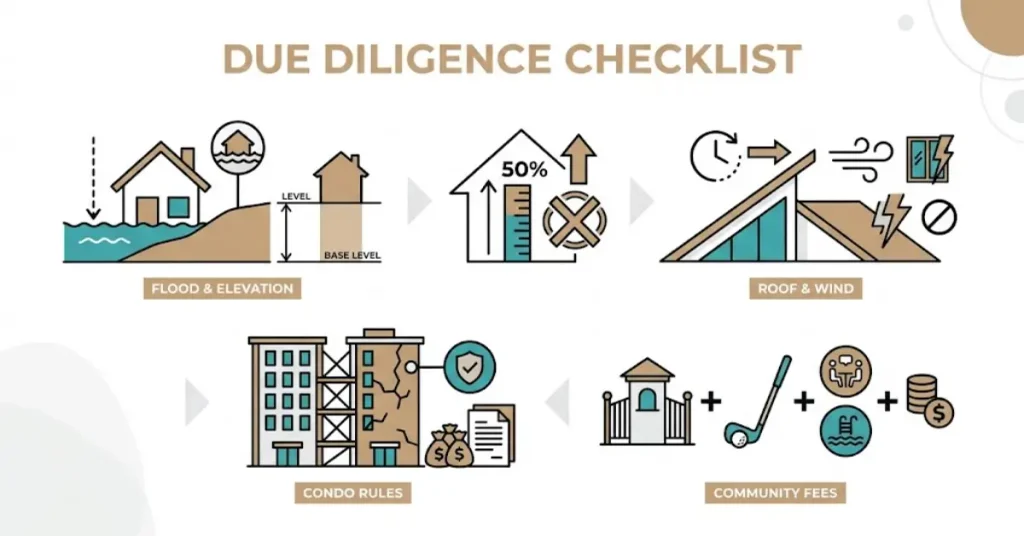
1. Flood zone and elevation certificate. Ask for the elevation certificate and compare the home’s lowest floor to the base flood elevation. This single document drives your flood premium.
2. The FEMA 50% rule. In a flood zone, if repairs or improvements exceed 50% of the structure’s market value, the whole home must be brought up to current flood codes. Older, low homes can become rebuild projects after one storm.
3. Roof age and wind mitigation. Insurers in Florida look closely at roof age. A recent roof, impact windows and a wind mitigation inspection can cut premiums significantly.
4. Condo structural rules. Florida’s 2022 condo safety law requires milestone inspections and structural reserve studies for many older buildings. These requirements have led to large special assessments. Review reserves and recent meeting minutes before buying a condo.
5. HOA, CDD and club fees. Many newer communities carry a Community Development District (CDD) assessment on the tax bill, and some include mandatory golf or social memberships. Add them all up before you compare homes.
Our relocation planning Florida guide walks through timing, school research, rentals and the move itself in more detail.
Make the Move With a Local, Broker-Led Team
Southwest Florida is a great place to live when you buy the right home in the right spot for your lifestyle and budget. Florida Listing Experts LLC is a broker-led, independently owned team based in Naples, and we know which streets flooded in Ian, which communities carry hidden fees and where the value still is.
Explore our Southwest Florida relocation services or call (239) 919-0933 to book a free consultation. We will help you narrow towns, compare true monthly costs and tour homes on your schedule, in person or virtually.
Frequently Asked Questions About Living in Southwest Florida
Is Southwest Florida a Good Place to Retire?
Yes, Southwest Florida is one of the most popular retirement regions in the U.S. Retirees benefit from no state income tax, homestead protection, a wide range of 55+ and golf communities, and strong healthcare systems in Naples and Fort Myers. For those planning a move to a smaller, more manageable home, senior downsizing in Southwest Florida can help simplify the transition. The main trade-offs are insurance costs and hurricane preparation.
What Are the Biggest SWFL Pros and Cons?
The biggest pros are warm winters, Gulf beaches, boating and no state income tax. The biggest cons are hurricane and flood risk, high homeowners insurance, hot and humid summers and seasonal traffic from January through April. Most buyers who research the cons first are happy with the move.
Is Naples or Fort Myers Better to Live In?
Naples is better for buyers who want luxury, upscale dining, and a polished downtown and can pay a higher price. Fort Myers is better for buyers who want more home for the money, more neighborhood variety and easy access to RSW airport. Many people split the difference in Estero or Bonita Springs.
How Bad Are Hurricanes in Southwest Florida?
Major hurricanes do not hit every year, but when they do, storm surge causes most of the damage. Hurricane Ian in 2022 showed that elevation, construction year and impact-rated windows and doors matter more than proximity to the beach. Buying on higher ground in a newer home lowers your risk.
How Much Income Do You Need to Live Comfortably in Southwest Florida?
It depends heavily on housing and insurance, which vary by town and flood zone. A homeowner in Lee County typically needs less than one in Naples, where median listing prices are much higher. Build your budget around a real insurance quote on the exact property, not a statewide average.
When Is the Best Time to Visit Before Moving to Southwest Florida?
Visit once in winter and once in summer. Winter shows you the lifestyle at its best, while a July or August visit shows you the heat, humidity, afternoon storms and how quiet some areas get off-season. If you still love it in August, you will love living here.
Is Living in Southwest Florida Expensive?
Living in Southwest Florida is more expensive than the national average in Naples and close to average in much of Lee County. Housing, insurance and HOA fees are the main costs, while the lack of a state income tax offsets part of the difference for households moving from high-tax states.