

Florida Listing Experts helps wealthy families plan a high net worth relocation to Florida every year. This Naples brokerage sees the same pattern again and again. Families move here for the money, and they stay for the privacy. Florida charges no state income tax or estate tax. The state also has some of the strongest asset protection laws in the country. This guide covers the tax math, the privacy tools, and the exact timeline your move needs.
TL;DR
● Florida has no state income tax and no state estate tax.
● IRS migration data shows Florida gained about $184,771 in net income per new resident. That is the highest number of any state.
● Legal domicile needs proof across five factors, not just a new driver’s license.
● Naples offers more privacy than Miami or Palm Beach for buyers who want to stay out of the spotlight.
What Makes a High Net Worth Relocation to Florida Worth It?
Florida charges zero percent on personal income. New York charges close to eleven percent. That gap adds up fast. A family earning five million dollars a year saves more than five hundred thousand dollars every year. Florida also skips the estate tax. New York and Massachusetts tax large estates at fairly low thresholds.
National numbers back this up. The Tax Foundation studied IRS migration records and found Florida’s net income gain reached about $184,771 per new resident in the latest filing year. No other state came close. Florida Listing Experts works with buyers across Naples and Collier County who move here to capture savings on this scale.
| State | Top Income Tax Rate | State Estate Tax |
| Florida | 0% | None |
| New York | 10.9% | Up to 16% |
| New Jersey | 10.75% | None (inheritance tax applies) |
| California | 13.3% | None |
| Massachusetts | 9% | Up to 16% |
How Do You Establish Florida Residency the Right Way?
Florida uses a simple starting test called the 183-day rule. Live here more than half the year, and the state treats you as a resident. Your old state still runs its own checks before it lets you go. Five factors matter most: your home size, your business ties, your daily time patterns, your personal belongings, and where your family actually lives.
A short checklist covers most of the legal work. File a Declaration of Domicile with your county clerk. Get a Florida driver’s license within thirty days. Register to vote at your new address. Move your bank accounts. Update your estate documents with a Florida attorney. Florida Listing Experts walks Naples-area clients through each step next to their own tax attorney and CPA.
What Privacy Protections Come With a Florida Move?
Florida law lets buyers title a home through an LLC or a land trust. This keeps the owner’s name off the public deed. One simple step like this stops most name-based searches cold. Many gated communities across Collier County add private security gates on top of that legal shield.
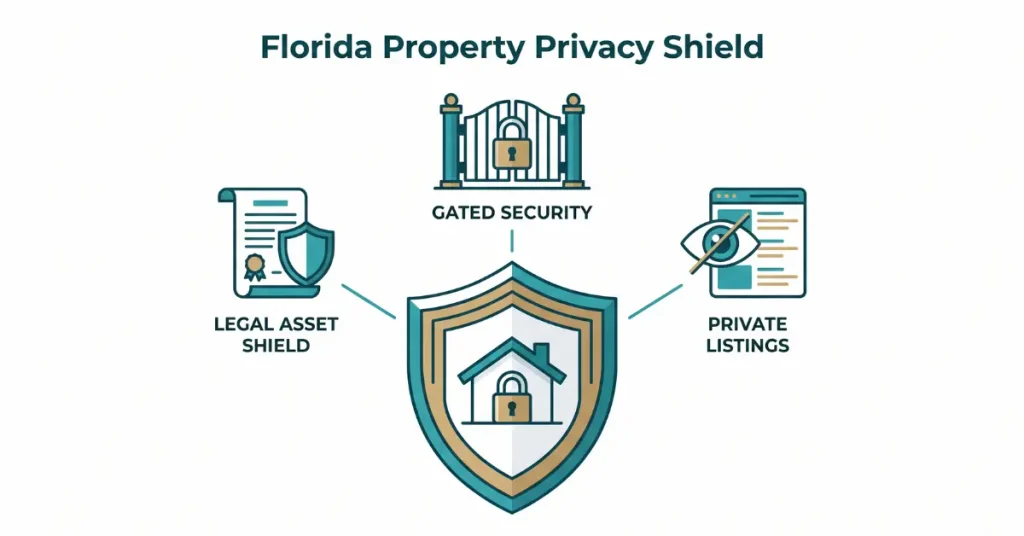
A land trust can also hold vehicles, boats, and other high-value assets under the same veil. Household staff can sign confidentiality agreements too. This covers property managers, housekeepers, and landscape crews. Naples draws far less media attention than Miami or Palm Beach. Families here skip the camera exposure common on Florida’s east coast. Florida Listing Experts sources specialized property listings for high net worth buyers. These homes never reach public search portals at all.
Why Choose Naples Over Miami for This Move?
Miami brings crowds, traffic, and constant camera attention. Naples offers the same zero-tax benefits with a quieter feel. Gated golf communities and private beach clubs shape the local market here. Families get room to breathe. They keep every tax advantage that started the search in the first place. Explore our guide to gated communities in Southwest Florida to see the full range of private neighborhoods available.
Collier County’s median luxury home price sits well below Miami Beach prices for the same square footage. Buyers often gain more privacy and more land here for the same budget. The Florida Listing Experts team works this exact niche every day. Their agents match relocating families with homes built for quiet living, not for attention. For a deeper look at why the region draws so many wealthy buyers, read our guide on why buy in Southwest Florida.
What Triggers a Florida Residency Audit?
Former-state tax offices watch for a few clear signals. A sudden income drop of thirty percent or more on a part-year return raises flags fast. Keeping the same square footage in your old home raises questions too. It suggests you never really left.
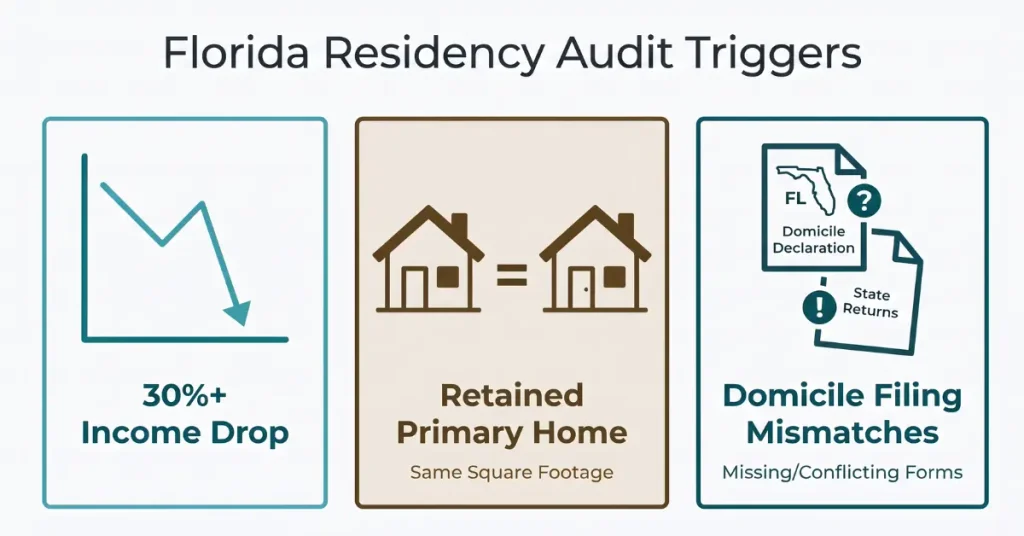
Spousal filing mismatches cause trouble as well. If one spouse claims Florida residency while the other still files back home, auditors take notice quickly. Filing the Declaration of Domicile late hands an auditor an easy opening. Skipping that filing entirely is worse.
What Is the Right Timeline for a Florida Relocation?
Start the property search six to nine months before your planned move date. Buy the home and file the Declaration of Domicile within that same window. Try to finish this step before the calendar year ends. File for the Homestead Exemption by March 1st of the following year to lock in the tax break early. Track every day you spend in the old state starting on day one. Auditors request this record often.
| Phase | Timeframe | Key Action |
| Search | Months 1-3 | Property search, tax and legal team assembled |
| Purchase | Months 3-6 | Home purchase closes, Declaration of Domicile filed |
| Settle | Months 6-9 | Driver’s license, voter registration, bank accounts moved |
| Lock In | Months 9-12 | Homestead Exemption filed, old-state residence downsized |
What About Business Owners Relocating to Florida?
Passive investors have an easier path than active business owners. If you still run a company in your old state, that state can tax income tied to that business, even after you claim Florida residency. The fix usually means real changes, not paperwork alone.
Move your headquarters if the business allows it. Hold board meetings in Florida. Shift daily decision-making to your new home base. A CPA who handles multi-state business income can map this out before you file your first part-year return.
Frequently Asked Questions
What Is the 183-Day Rule in Florida?
It’s the day-count test states use to judge residency. Live in Florida more than 183 days, and the basic threshold is met. Domicile factors still carry more weight in an audit.
Can I Keep My Home in My Old State?
Yes, but downsize it. Auditors compare that home’s size against your new Florida home. A large second residence raises questions fast.
When Does the Homestead Exemption Apply?
Own and occupy the Florida home by January 1st. File the paperwork by March 1st of that same year.
Does a High Net Worth Relocation to Florida Always Make Financial Sense?
Not always. A family earning under two million dollars a year may see the payoff arrive slowly. Legal fees and moving costs take longer to earn back at lower income levels.
Do I Need a Real Estate Agent Who Understands Wealthy Buyers?
Yes. Off-market access, private showings, and discreet negotiation matter more here than in a typical home sale. Florida Listing Experts handles each of these details for Naples clients directly.
Start Your High Net Worth Relocation to Florida Today
This Naples brokerage helps families complete a high net worth relocation to Florida with the right property, the right timeline, and real privacy protections built in from day one. Browse the Southwest Florida relocation guide or explore the Southwest Florida relocation services page for the full picture. Call (239) 919-0933 to speak with the Florida Listing Experts team directly.