
Buying a seasonal home in Florida comes down to three choices. You decide what you’ll pay in taxes, what your HOA allows, and how you’ll leave the house empty. Florida Listing Experts LLC (FLE) helps snowbirds make those choices in Naples every season. This guide gives you the numbers, the rules, and the checklists to bring to your first showing.
TL;DR
- A Florida second home in Naples gets no homestead exemption.
- Florida law limits a non-homestead assessment increase to 10% a year today. After voters approved Amendment 3, that cap drops to 5% on non-school value starting January 1, 2027.
- Your HOA or condo association sets your rental rules, so read them before you offer.
- Ask your agent for a vacancy endorsement and a separate flood policy.
- Home watches, smart sensors, and a closing checklist make lock-and-leave work.
What Should You Know Before Buying a Seasonal Home in Florida?
Know your use plan first, because it picks your home type. A seasonal home is a place you live in for a few months, most often from December to April. Condos need the least upkeep. Villas and coach homes share exterior care. Gated single-family homes give you space and more work.
Many buyers search Southwest Florida snowbird homes by neighborhood. Park Shore, Pelican Bay, Old Naples, and Vanderbilt Beach each feel different. Compare them in our guide to luxury Naples neighborhoods. FLE matches your plan to the right Naples community.
How Much Do Florida Second Home Taxes Cost in Naples?
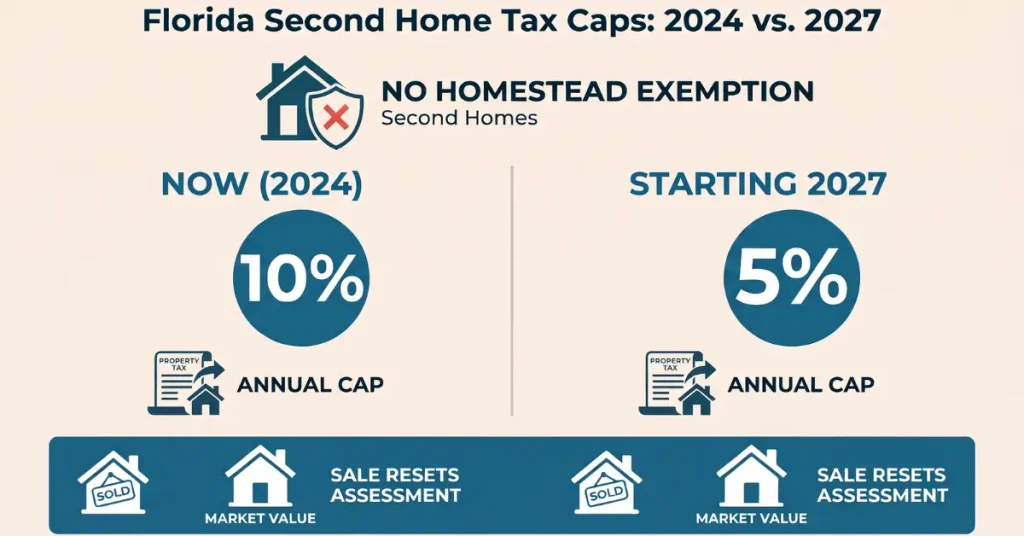
You pay full property tax, because a Florida second home gets no homestead exemption. Florida has no state income tax, so property tax is one of your largest yearly bills in Collier County, along with insurance and HOA or condo fees. Homestead owners get the Save Our Homes cap of 3% a year. You don’t. Since 2009, non-homestead property has had a 10% cap on yearly assessment increases, and the cap skips the school board portion.
A sale resets your assessed value to market value. Then the millage rate sets your bill. One mill equals $1 per $1,000 of value. At 10 mills, a $750,000 assessment costs $7,500 a year. That’s a math example, not a quote. Your August TRIM notice shows the real rate.
Voters approved Amendment 3 on November 3, 2026 (Florida Phoenix reported more than 62% of the unofficial vote, above the required 60%; results stay unofficial until certified). It takes effect January 1, 2027 and cuts the non-homestead cap from 10% to 5%, applied to the non-school portion of your bill as the 10% cap is today. The larger homestead exemption does not apply to second homes, and your millage rate can still change each year, so slower value growth is not the same as a lower tax rate. Rent the home out, and the IRS adds rules for income and depreciation. Ask a CPA before you buy. FLE agents in Naples pull the current millage for any address.
Can You Rent Your Seasonal Home Under Naples HOA Rules?
Your HOA or condo association decides, so read its rental rules before you make an offer. Location matters too. The City of Naples allows a dwelling to be rented for fewer than 30 days only three times a year, and every rental after that must run at least 30 days. Communities such as Pelican Bay and Vanderbilt Beach sit in unincorporated Collier County, where county rules apply, including short-term rental registration, so confirm whether your address is in the city or the county. Many associations add 30 to 90 day minimums and yearly lease limits. State law also differs by community type. In an HOA, Florida law lets the association amend its documents to regulate rentals shorter than six months, or to limit rentals to three a year, and those rules bind every owner, even those who voted no. In a condo, a rental amendment applies only to owners who consent and to buyers who purchase after it takes effect. Either way, the rules in place when you buy will apply to you, so read the current documents.
Seasonal leases run 30 to 90 days, mostly from December through April. Owners who want income often study vacation rentals in Southwest Florida before they pick a community.
Ask for these documents before you close:
- Declaration of covenants and bylaws
- Current budget and reserve study
- Structural inspection report for condos
- Written rental policy and approval timeline
- Any pending special assessments
FLE reviews these papers with every Naples buyer.
Do You Need Special Insurance for a Home You Leave Empty?
Yes, ask your agent about a vacancy endorsement or a seasonal policy. Insurers treat a home that sits empty for long stretches as a higher risk, and many policies limit or exclude certain losses once a home has been vacant for a set number of days. Ask three questions. How many empty days trigger limits? Does a water leak still pay? Do home watch visits count?
A standard homeowner policy skips flood damage. You need a separate flood policy from the National Flood Insurance Program or a private carrier.
A wind mitigation inspection records your roof, shutters, and openings. Insurers use it to price wind coverage. Our guide to hurricane-ready homes in Southwest Florida shows which features earn premium credits. Hurricane season runs June 1 to November 30, so schedule the inspection during your option period, whatever month you buy. An FLE buyer agent in Naples lines up quotes before closing.
How Do You Lock and Leave a Florida Home?
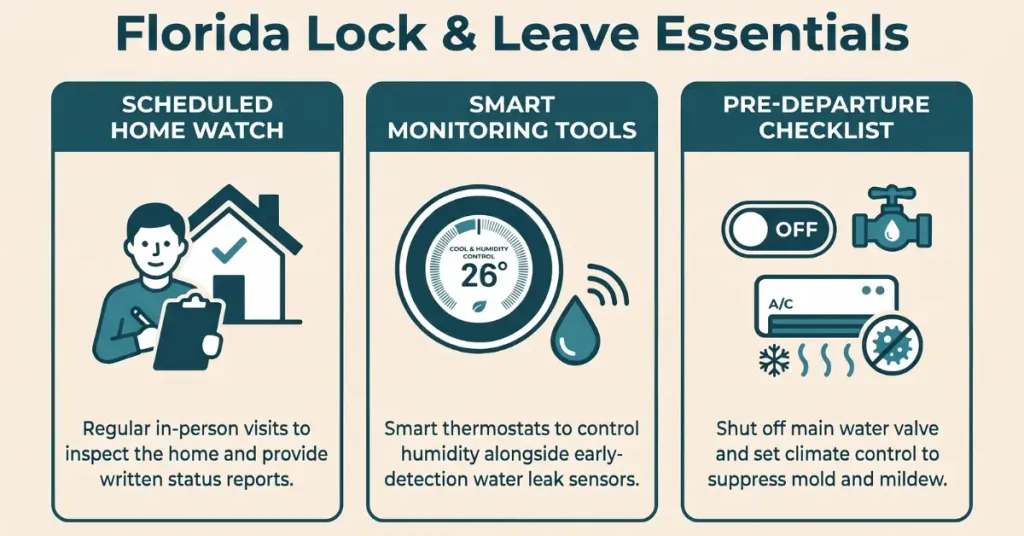
A lock-and-leave Florida home needs three things: a person who checks it, tools that watch it, and a closing checklist. A home watch service visits on a schedule and sends a written report. A smart thermostat controls humidity. Leak sensors catch water early.
Empty Florida homes can attract mildew, storm damage, and pests. Run this checklist each April:
- Set the A/C to hold humidity down.
- Shut off the main water valve.
- Empty and clean the fridge.
- Wash linens and leave closet doors open for airflow.
- Book your home watch visits.
- Name one person for shutters, one for storm checks, and one for your insurance claim.
Many gated Naples communities handle landscaping and gate security, so your list stays short. FLE helps you find lock-and-leave homes that fit.
When Should You Start Buying a Seasonal Home in Florida?
Start in summer or fall, and close before winter. That timeline gives you room to read HOA papers and compare insurance quotes. If the season has already started, you can still buy now and use the home this winter, or plan ahead and begin the process next summer.
| When | What to do |
| June to August | Pick your Naples community and set a budget |
| September to October | Tour homes and request insurance quotes |
| November | Close and book home watch |
| December | Arrive for the season |
| April | Close up the house with your checklist |
Florida Listing Experts LLC plans each step with you, from the first tour to the closing table.
Frequently Asked Questions
Do second homes get the homestead exemption in Florida?
No. Only your permanent residence qualifies for the homestead exemption. A Naples second home pays tax on its full assessed value.
How much are property taxes on a second home in Naples?
Multiply the assessed value by the millage rate. A $750,000 home at 10 mills pays $7,500. Your TRIM notice shows the real rate.
Can I rent my seasonal home in Naples?
Yes, when your HOA or condo association allows it. The City of Naples allows only three rentals shorter than 30 days a year, unincorporated Collier County has its own registration rules, and many associations set longer minimums.
What does lock-and-leave mean in Florida?
It means a home you close up and leave for months with little upkeep. Home watch, association maintenance, and smart sensors do the work.
Do I need special insurance for a seasonal home?
Ask for a vacancy endorsement or seasonal policy. Add a separate flood policy, since standard homeowner coverage skips flood.
Is the property tax amendment going to lower my taxes?
Not directly. Amendment 3, which voters approved on November 3, 2026, cuts the non-homestead cap from 10% to 5% on non-school value starting January 1, 2027. That slows future assessment growth but does not lower today’s assessed value, and your millage rate can still change.
When is the best time to buy a seasonal home in Naples?
Start three to four months before you plan to arrive, which usually means summer or fall for a December arrival. Our snowbird homes guide covers which Southwest Florida communities fit a winter home.
Ready to Start Buying a Seasonal Home in Florida?
Buying a seasonal home in Florida goes smoothly when you know your taxes, HOA rules, and leave-behind plan. Florida Listing Experts LLC (FLE) guides Naples buyers through each step. Call (239) 919-0933 to talk with a local agent.
This guide gives general information, not tax or legal advice. Talk with a Florida CPA, an attorney, and an insurance agent before you buy.